
ABA therapy in Houston
Play-based, data-driven therapy that helps children with autism communicate, connect and become more independent — designed and supervised by a Board Certified Behavior Analyst.
What is ABA therapy?
Applied Behavior Analysis (ABA) is the most widely researched therapy for autism. It looks at how behavior works — what happens before and after it — and uses positive reinforcement to teach skills that matter in your child’s daily life.
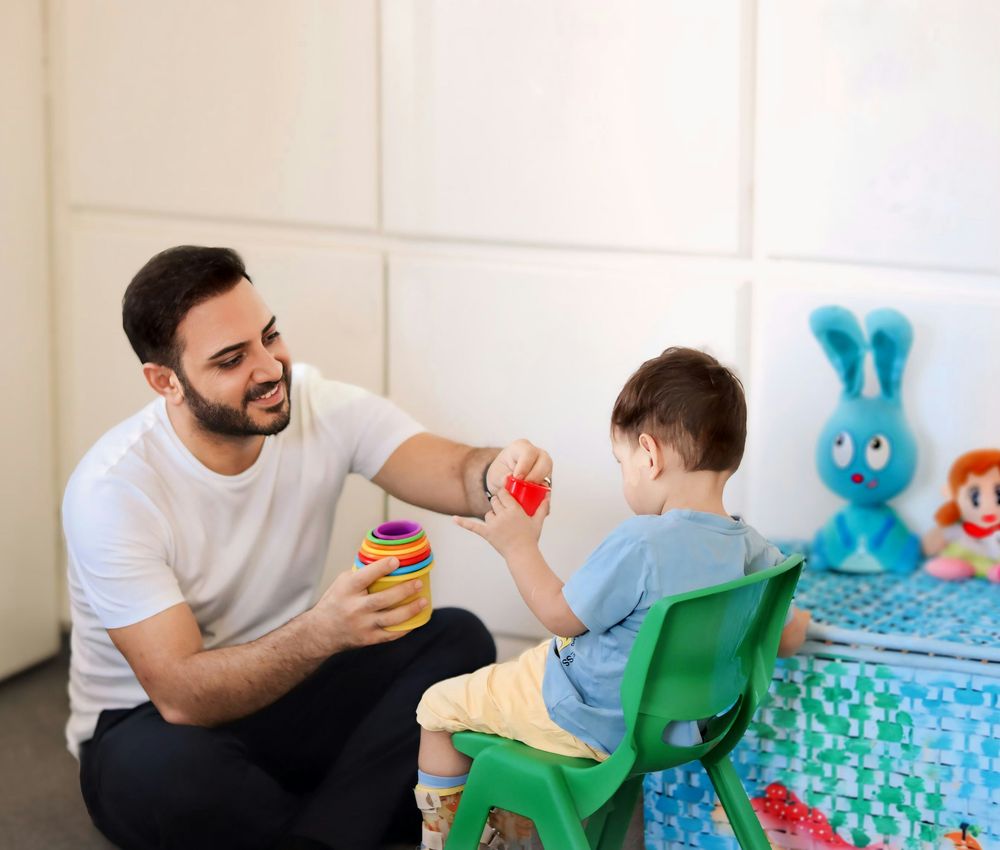
At Blue Mind, ABA looks like play. Your child’s therapist follows their interests, celebrates every step and breaks big goals into small, achievable ones. Behind the fun, every session is guided by a plan and measured with data.
Who ABA therapy can help
- Children and teens with an autism spectrum disorder diagnosis
- Kids with limited language or communication
- Children who struggle with transitions, routines or flexibility
- Families facing meltdowns, aggression or self-injury
- Kids who need support with toileting, feeding or self-care
- Children preparing for school, or who need support in the classroom
What we work on
Communication
Requesting, labeling, conversation and using words, signs or devices to express needs.
Social & play skills
Sharing, taking turns, joint attention and making friends.
Daily living
Toileting, dressing, eating, hygiene and safety routines.
Behavior support
Understanding the “why” behind challenging behavior and teaching better ways to meet the same need.
School readiness
Following directions, sitting for group activities and early academic skills.
Parent training
Practical strategies you can use every day, coached by your BCBA.
How ABA therapy works at Blue Mind
- 1
It starts with an assessment by a BCBA, who observes your child, talks with you and uses standardized tools to understand strengths and needs.
- 2
The BCBA writes a personalized treatment plan with clear, measurable goals and recommends weekly hours. Once the plan is in place, a Registered Behavior Technician (RBT) works one-on-one with your child under the BCBA’s ongoing supervision.
- 3
Sessions happen where your child lives and learns: at home, at school or in the community. Your BCBA reviews data regularly, updates goals and meets with you for parent training.
ABA therapy questions
At what age can ABA therapy start?
ABA can begin as soon as a child is diagnosed, often between 18 months and 3 years. Early intervention tends to have the greatest impact, but older children and teens also benefit.
Is ABA therapy one-on-one?
Yes. Most ABA sessions are one-on-one with an RBT. As your child grows, we may add small-group or school-based sessions to practice social skills with peers.
Ready to take the first step?
Talk with our intake team. We will answer your questions and explain every step — at no cost and with no commitment.